Ask a woodworker why they do what they do, and you'll hear practical answers at first — they needed a shelf, they wanted to save money, they enjoy working with their hands. But keep asking, and something deeper emerges. Almost invariably, they'll mention the quiet. The focus. The way time behaves differently in the workshop, stretching and compressing in ways that feel almost mystical.
Woodworking, for many of its practitioners, is a form of meditation. Not the cross-legged, empty-mind variety, but something equally powerful: a state of deep, focused engagement that crowds out worry, silences the mental chatter, and leaves you feeling more whole than when you started.
The Demand for Presence
Woodworking demands your attention in a way that few other activities do. A momentary lapse while hand-planing means a gouge in the surface. Distraction at the table saw is genuinely dangerous. The craft insists that you be here, right now, fully engaged with the material and the tool and the moment.
This forced presence is, paradoxically, one of the great gifts of the work. In the workshop, the endless loop of worries and plans and regrets that fills most of our waking hours simply has no room. Your hands are busy. Your eyes are focused. Your mind is occupied with something tangible and immediate. The mental noise fades — not because you've willed it away, but because it's been displaced by something more interesting.
Psychologists call this state "flow" — the condition of being so absorbed in an activity that self-consciousness dissolves and time distorts. Woodworking is one of the most reliable flow-state activities there is, precisely because it combines physical skill, problem-solving, and sensory engagement in a way that captures the whole mind.
The Rhythm of Repetition
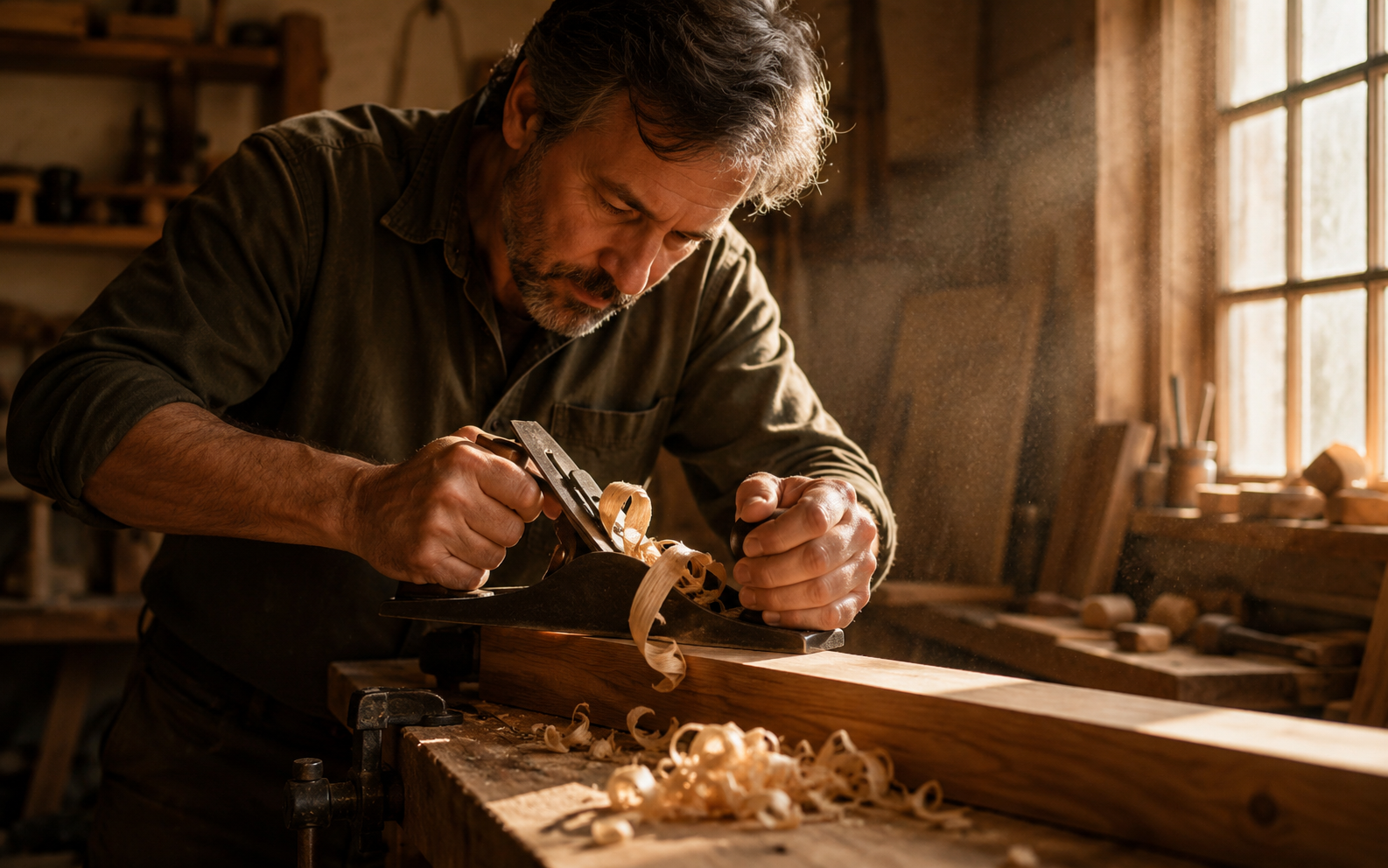
Many woodworking tasks are rhythmic. The back-and-forth of a hand plane. The steady push-pull of a handsaw. The repetitive strokes of sandpaper. These rhythms are calming in the way that waves or footsteps are calming — they create a pattern your body settles into, freeing your mind to drift into a contemplative state.
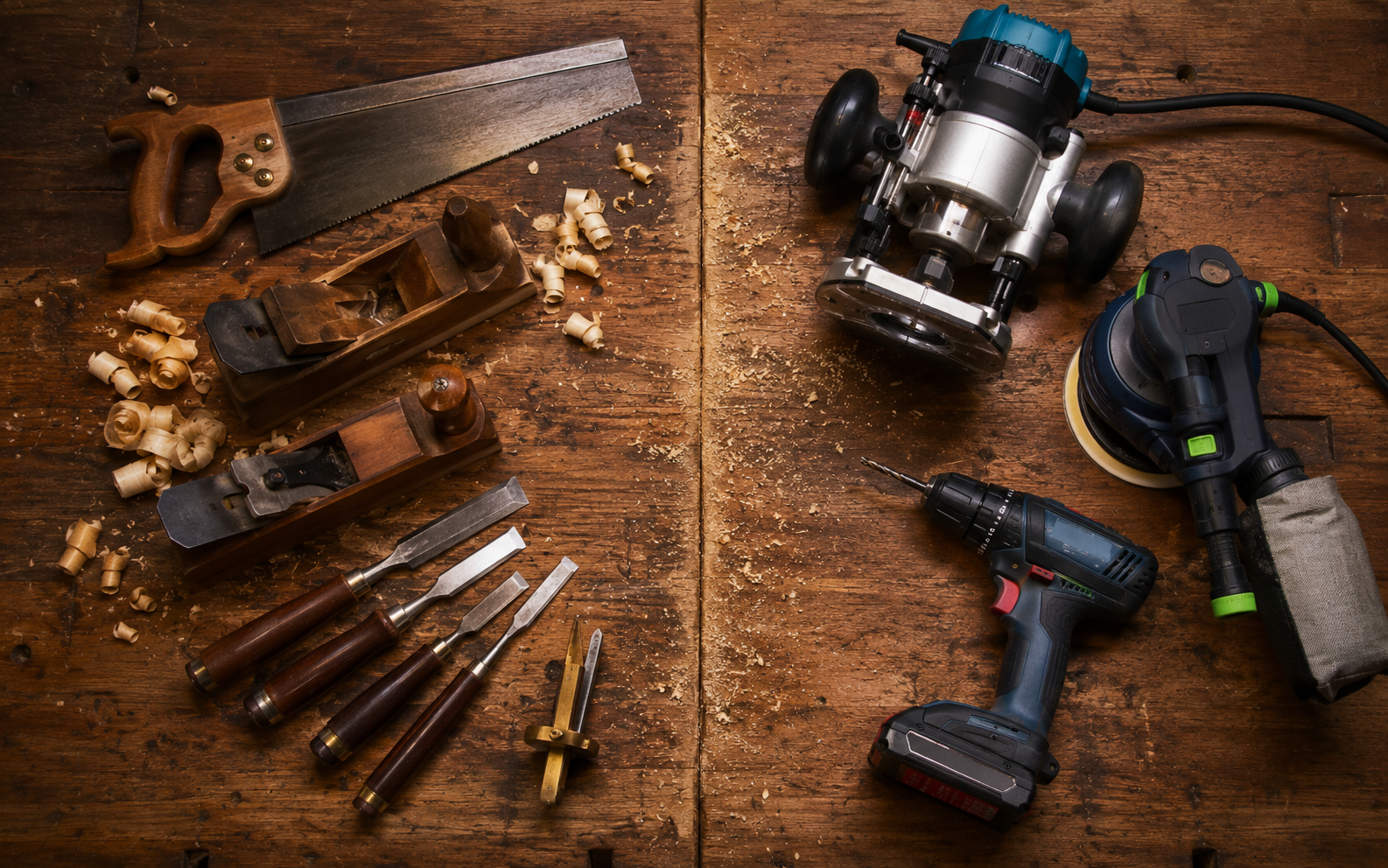
This is particularly true of hand tool work, where the rhythms are slower and more pronounced. There's a reason many woodworkers who start with power tools eventually drift toward hand work — the experience is qualitatively different. It's quieter, slower, and more connected. Each stroke provides feedback. Each shaving tells you something about the wood and the blade and the angle. The conversation between maker and material is intimate and ongoing.
Even the pauses matter. Stopping to sharpen a blade. Checking your layout against a square. Standing back to assess the piece from a distance. These natural breaks punctuate the work in a way that prevents the kind of mindless automaticity that deadens attention. You're always engaged, always thinking, but never stressed.
Making Something Real
There's also a therapeutic dimension to the sheer materiality of woodworking. In an era where most of our work is abstract — emails, spreadsheets, meetings about meetings — the act of shaping physical material with your hands is grounding in a way that's hard to overstate.
At the end of a session in the workshop, you can point to something and say: I made that. It's real. It exists in the world because of what I did today. In a culture that increasingly struggles with meaning and purpose, that simple fact carries enormous weight. The satisfaction isn't about ego or accomplishment — it's about the basic human need to create, to transform, to leave a mark.
Wood itself contributes to this. It's warm, literally and aesthetically. It smells good — the sweet scent of fresh-cut cherry, the clean bite of cedar, the honey notes of oak. It responds to your touch, growing smoother and more alive with each pass of the plane. Working with wood is a sensory experience that engages the body as much as the mind.
The Workshop as Sanctuary
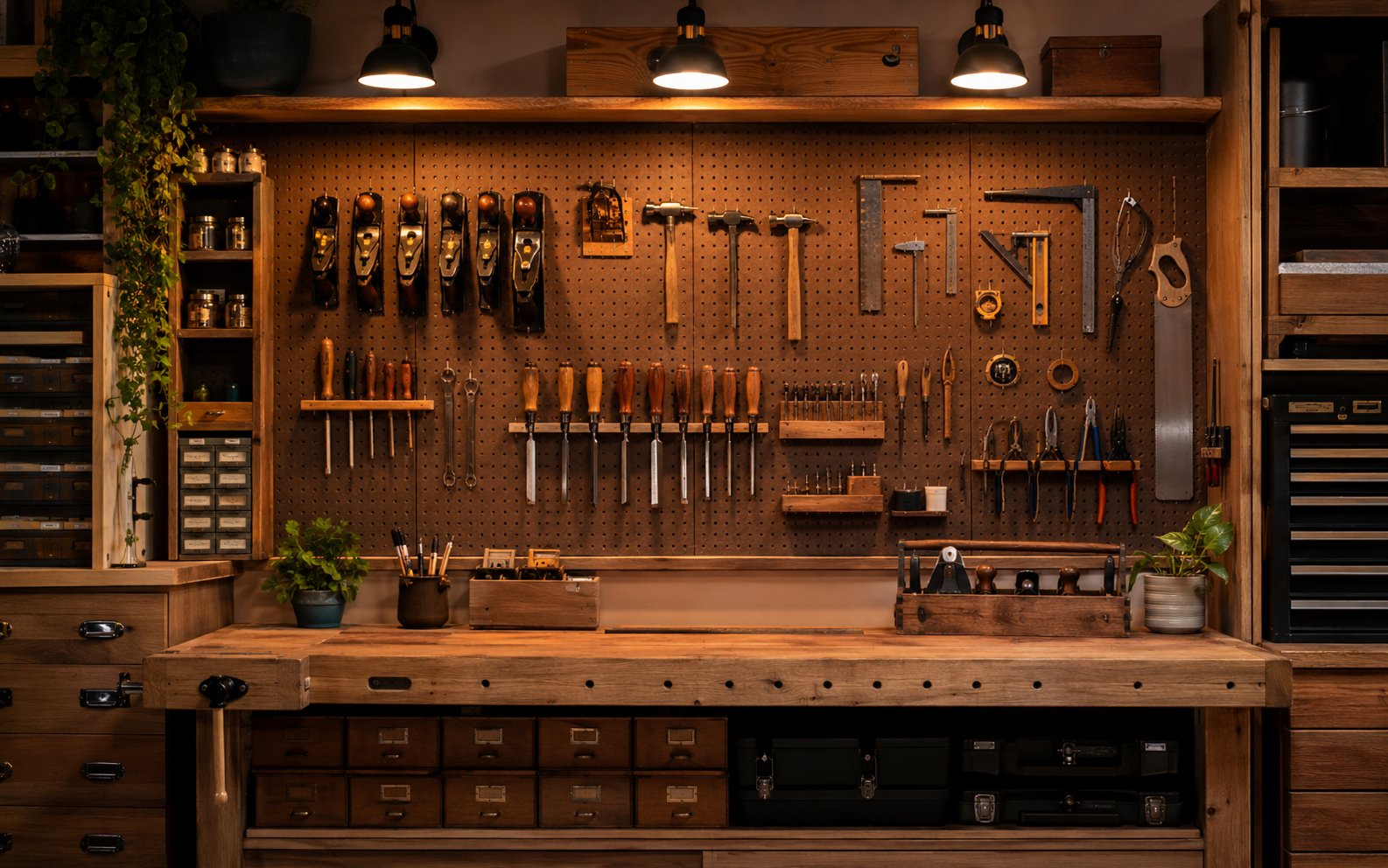
For many woodworkers, the workshop becomes a kind of sanctuary — a place apart from the demands and noise of daily life. It doesn't matter whether it's a dedicated building, a garage corner, or a workbench in the basement. Once you step into that space and pick up a tool, the rest of the world recedes.
This isn't escapism. It's restoration. The time spent in the workshop doesn't take you away from your life — it gives you back the clarity and calm you need to engage with it more fully. Woodworkers who describe their craft as therapy aren't exaggerating. They're identifying something real and important about what happens when you work with your hands in a focused, intentional way.
If you've ever wondered why woodworking has experienced such a resurgence in popularity — particularly among people with high-stress, screen-dominated jobs — this is the answer. It's not about the furniture. It's about the feeling. The quiet satisfaction of a well-cut joint. The smell of shavings on the floor. The simple, profound pleasure of making something with your own two hands.